

Our Blogs
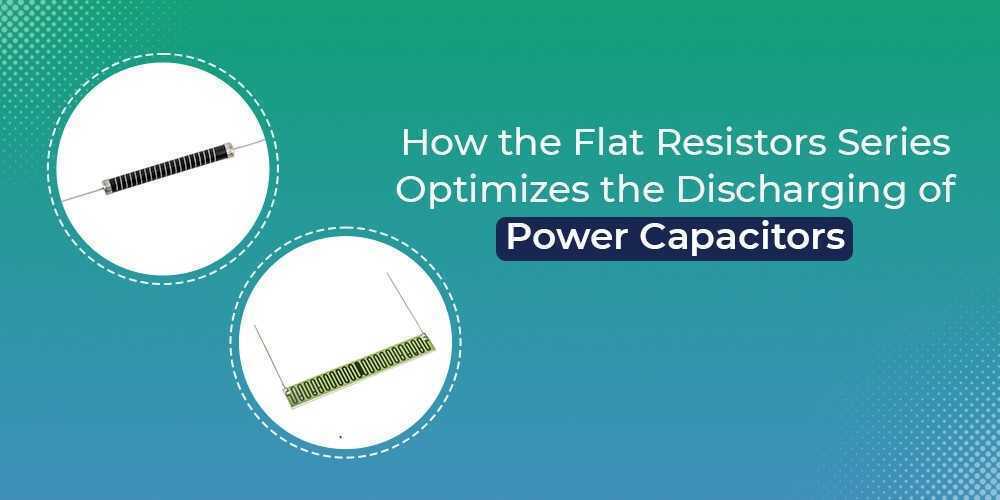
How the Flat Resistors Series Optimizes the Discharging of Power Capacitors
Summary
Every robust power system, from industrial motor drives to renewable energy storage, faces a critical engineering mandate: the safe and efficient discharging of power capacitors. This is not merely a compliance issue; it is the cornerstone of system integrity and longevity. This article presents a practical, time-honored solution, demonstrating how Cermet Resistronics’ Flat Resistors Series provides the highest reliability and most effective method for this essential process, ensuring optimal operational performance.
Solution
The most practical and time-honored solution to the imperative of quickly and safely discharging of power capacitors involves leveraging the established, robust performance and compact thermal management of the Flat Resistors Series, which provides an enterprise-grade, high-reliability path for energy dissipation in any power electronics application.
The Critical Mandate of Safe Power-Down
For anyone involved in the maintenance or design of energy storage systems, the residual charge in a circuit after power removal is a significant liability. Ignoring the need for controlled discharging of power capacitors is simply not an option for any enterprise valuing safety and equipment protection. Our traditional outlook, valuing the past and how things have always been done, dictates that a dedicated, high-quality component must be employed for energy dissipation.
This critical requirement applies across numerous high-voltage domains:
- Inverters and Converters: Rapid discharging of power capacitors is essential to protect maintenance personnel during service.
- Variable Frequency Drives (VFDs): Ensuring the DC bus voltage is brought to a safe level quickly is a non-negotiable step in power electronics.
- Medical Equipment: The reliability of discharge of power capacitors in imaging systems or defibrillators is literally a matter of life and death.
The challenge is clear: how do we dissipate high levels of stored electrical potential rapidly, repeatedly, and without compromising the integrity of the resistor itself? This is where the solution must be practical above all else. The longevity of the resistor directly impacts the total cost of ownership for the entire system.
The Practical Advantage of Flat Resistors Series
To think outside the box often means to re-evaluate the foundational components. The Flat Resistors Series provides an innovative, yet grounded, approach to the specific demands of discharging power capacitors. They are intentionally engineered to manage high transient power with exceptional stability.
Why is the Flat Resistors Series the superior component for this application?
- Superior Pulse Handling Capability: The geometry of the resistor core the flat design, allows for a higher thermal mass in a compact volume compared to conventional wirewound resistors. This enables the resistor to absorb a massive, short-duration pulse power application without overheating or catastrophic failure. When managing the high voltage discharge from a large capacitor bank, this capability is paramount.
- Enhanced Heat Dissipation: The expansive surface area of the Flat Resistors Series ensures that heat generated during the discharging of power capacitors is effectively and rapidly transferred away from the resistive element. This makes them ideal for systems requiring frequent discharge cycles.
- Space and Form Factor: In modern, high-density power electronics, every millimeter counts. The flat profile allows for practical, efficient integration into existing enclosures and PCB layouts, providing a robust solution without demanding excessive real estate.
This component design embodies the principle of robust engineering, a strong opinion we readily share that simpler, more enduring construction always yields greater reliability for tasks like safe discharging of power capacitors.
The Cermet Resistronics Implementation Pathway
Our Service Provider, Cermet Resistronics, has established a deep, traditional outlook on quality component manufacturing. We believe in providing components that are not just compliant but demonstrably superior for every application, especially the critical task of discharging power capacitors.
We offer the Flat Resistors Series as a core technology for reliable resistor technology in industrial power systems. Our approach is empathetic and understanding of the pressures facing engineers. You need a component that you can install and essentially forget, knowing it will function perfectly during a crisis.
Key Considerations for Specification:
- Energy Rating (Joules): This is the most practical metric for selecting a resistor for the discharge of power capacitors. The resistor must be rated to absorb the maximum stored energy.
- Resistance Value: The value determines the discharge time constant. A lower resistance value means a faster discharge, but requires a higher energy handling capability from the resistor. The Flat Resistors Series is specified to meet these demanding R-C networks in energy storage systems.
- Packaging: Whether your application is an industrial high voltage discharge setup or a compact power electronics board, the flat resistor design offers versatile mounting options for effective thermal transfer.
By integrating the Flat Resistors Series into your design, you are not just buying a component; you are investing in an elevated system resilience. The integrity of your overall operation depends on these crucial points of discharging power capacitors. We encourage you to explore our main company site for additional resources on resistors for power electronics and other core components that drive system performance.
The practical reality is that the best discharging of power capacitors solution is the one that has the lowest risk of failure. This is the Flat Resistors Series advantage. They represent a clear path to safe power-down compliance and operational integrity across the globe, enhancing your overall strategic position and ensuring your systems maintain their expected power electronics performance lifecycle.