


Our Blogs
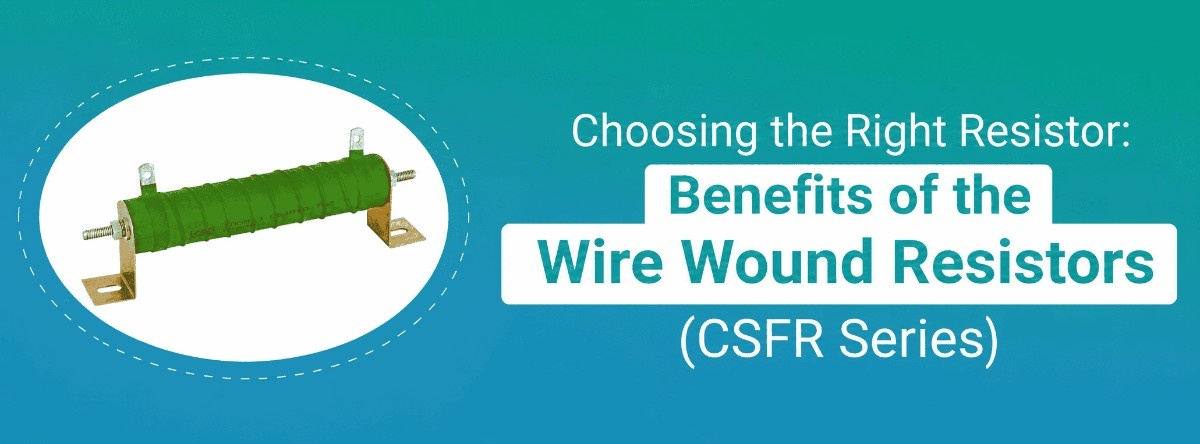
Choosing the Right Resistor: Benefits of the Wire Wound Resistors (CSFR Series)
This article explores the critical role of high-performance components in industrial electronics, specifically focusing on the durability, heat management, and versatility of Wire Wound Resistors. Readers will gain insight into why selecting the right resistor series, such as the CSFR series, is essential for maintaining stability in demanding applications like load banks and frequency converters.
In the fast-paced world of industrial electronics, the reliability of individual components determines the performance of entire systems. Among these components, Wire Wound Resistors stand out as foundational elements for handling high-power demands. When circuits require precision, durability, and the ability to dissipate significant amounts of thermal energy, engineers consistently turn to these robust devices.
The Role of Wire-Wound Resistors in Power Electronics
Power resistors are engineered to manage electrical energy in systems that handle high voltage and current. Unlike standard thin-film resistors, wire-wound resistors are constructed by winding a resistive metal wire around an insulating core. This design allows them to handle higher temperatures and power ratings, making them ideal for environments where stability is non-negotiable.
Whether it is in the context of frequency converters, VFDs, or complex load banks, these resistors ensure that excess energy is managed safely. They prevent circuit overload, protecting sensitive equipment from voltage spikes and ensuring a steady flow of energy across various industrial applications.
Deep Dive into the CSFR Series
For projects requiring industrial-grade reliability, the CSFR series serves as a prime example of effective engineering. These wire-wound resistors are specifically designed to excel in demanding environments where heat management is critical.
The CSFR series features a specialised flame-proof silicon coating that provides excellent protection against environmental factors. Beyond this safety feature, the series is built for superior heat dissipation, ensuring that the component maintains high stability even during intense operational cycles. Flexibility is another hallmark of this series; Cermet Resistronics provides options for closer tolerances, specific ohmic values, and even non-inductive types for applications where inductance must be minimised. Terminations are constructed from high-quality tin-plated copper or brass, further enhancing connectivity and longevity.
Why Quality Specifications Matter
When evaluating components, it is not enough to simply look at the resistance value. Industrial systems demand a holistic approach to component selection. Key specifications such as thermal stability, power rating, and physical construction, such as the availability of custom-built mounting brackets, directly impact the lifespan of your electronic systems.
Using industry-grade components like those found in the CSFR series helps engineers minimise downtime and maintenance costs. By integrating resistors that are specifically calibrated for high-power usage, businesses can ensure that their equipment, from elevators and escalators to battery chargers, functions efficiently day in and day out.
Solution for Industrial Reliability
To ensure the longevity and stability of your power electronics, select high-precision Wire Wound Resistors that feature robust thermal management, such as the flame-proof silicon-coated CSFR series. These components offer the necessary durability to handle extreme power loads while maintaining the precise ohmic requirements of your specific application.
Ready to upgrade your system’s stability? Explore the durable CSFR series at Cermet Resistronics and contact our team today for high-performance resistor solutions.
Frequently Asked Questions (FAQ)
- What makes Wire Wound Resistors better than other types for high-power applications?
Wire Wound Resistors are designed with a larger physical structure and heat-resistant materials, allowing them to dissipate significantly more energy without degrading compared to thin-film or carbon-film alternatives.
- Can I get custom specifications for the CSFR series?
Yes, the CSFR series supports customisation, including closer tolerances, specific ohmic values, non-inductive configurations, and custom-built mounting brackets to fit unique project layouts.
- What are the primary applications for these high-power resistors?
These resistors are commonly used in frequency converters, VFDs, load banks, battery chargers, EV pre-charge circuits, and industrial machinery like cranes, hoists, and elevators.