

Our Blogs
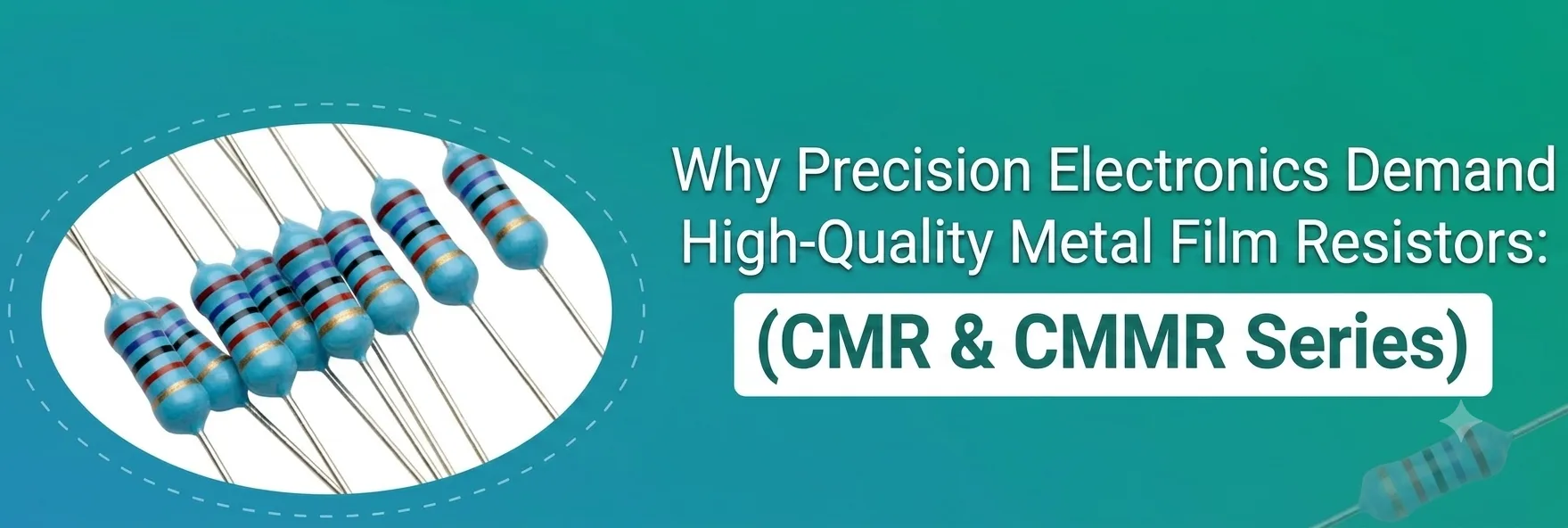
Why Precision Electronics Demand High-Quality Metal Film Resistors (CMR & CMMR Series)
Selecting passive components with tight tolerances and low temperature coefficients determines the long-term stability of sensitive electronic circuits. This article examines the construction, technical specifications, and industrial applications of the CMR and CMMR series of metal-film resistors produced by Cermet Resistronics.
When modern circuit designs require thermal stability, low noise, and minimal drift under load, choosing a specialized metal film resistor with tight tolerance limits (down to 1%) and JSS 50401 compliance ensures dependable performance across high-frequency and sensitive power electronics.
Engineering Precision Circuits: A Complete Guide to CMR and CMMR Metal Film Resistors
Precision electronics require passive components that perform consistently under variable thermal and electrical loads. Standard film resistors can drift when exposed to temperature fluctuations, causing signal distortion or balance issues in critical circuits. Modern electronic assemblies from energy meters to BLDC motors rely on metal film resistors to maintain stable resistance values across demanding operating environments.
When evaluating component options, engineers turn to an experienced resistor solution company capable of producing stable, highly reliable axial passive components. Cermet Resistronics manufactures the CMR and CMMR series using fully automated processes to meet these rigorous industrial demands.
Understanding Metal Film Resistor Construction
Metal film resistors are constructed by depositing a thin layer of conductive metal alloy onto a high-grade ceramic core. This resistive element is trimmed precisely to achieve exact electrical parameters before being encapsulated in a protective coating.
Unlike carbon film components, metal film resistors offer significantly lower thermal noise and superior voltage coefficient characteristics. The CMR and CMMR series incorporate tin plated copper wire leads, which provide excellent solderability during automated PCB assembly and manual soldering processes.
Key Engineering Specifications
Cermet Resistronics manufactures the CMR and CMMR series to meet strict industry standards, including JSS 50401 compliance.
- Manufacturing Process: Produced using a fully automated manufacturing line to guarantee unit-to-unit consistency.
- Standard Tolerances: Available in 1%, 2%, and 5% standard tolerance options. Tighter tolerance limits are available upon request for high-precision circuit designs.
- Temperature Coefficient of Resistance (TCR): Designed with low TCR characteristics to limit resistance drift during ambient temperature swings. Custom low TCR options can be specified on request.
- Lead Termination: Tin-plated copper wire termination for uniform solder flow and strong joint integrity.
- Marking Protection: Durable, solvent-proof color code marking that resists degradation during flux cleaning operations.
- Special Variants: Flame-proof body constructions available upon custom request for safety-critical circuits.
Because metal film resistors combine tight tolerances with thermal stability, they serve as core passive elements across several modern technology sectors:
1. Power Electronics and Energy Meters
Measurement circuits in smart energy meters require accurate current sensing and minimal drift over decades of continuous operation. The CMR and CMMR series provide the low noise floor and long-term stability required for metering equipment.
2. Battery Chargers and Automotive Electronics
Automotive sub-assemblies experience rapid changes in ambient temperature. Using a metal film resistor with low TCR ensures that sensor bias networks and control loops remain balanced regardless of engine bay heat or changing weather.
3. BLDC Motors and Frequency Converters
Inverter drives, VFDs, and BLDC motor controllers require clean control signal feedback. Low-noise metal film resistors prevent false signal tripping and help maintain accurate speed regulation.
4. Lighting and Industrial Controls
Commercial LED driver systems and power supply boards utilize flame-proof metal film resistor variants to meet safety isolation requirements while maintaining steady current regulation.
Why Partner with Cermet Resistronics?
Selecting the right component supplier involves more than reviewing datasheets; it requires working with an established resistor solution company that understands end-use environments. Established in 1990, Cermet Resistronics brings 34 years of manufacturing expertise and over 60 years of R&D background in resistor technology. Operating out of a 100% solar-powered facility with ISO 9001:2015, ISO 14001:2015, CE, RoHS, and REACH certifications, Cermet produces high-precision passive components that power industrial applications across global markets.
Frequently Asked Questions (FAQs)
- What makes the CMR and CMMR series metal film resistors suitable for precision applications?
The CMR and CMMR series utilize a precision metal film layer on a ceramic core, providing tighter resistance tolerances (down to 1%), lower noise levels, and superior temperature stability compared to carbon film alternatives.
- What lead material is used on these metal film resistors to ensure good solderability?
These resistors feature tin-plated copper wire leads, which resist oxidation and promote clean, consistent solder wetting during both wave soldering and manual hand-soldering operations.
- Can the CMR and CMMR series metal film resistors be used in harsh chemical or cleaning environments?
Yes. The series features solvent-proof color code marking that withstands common PCB washing solvents without fading or smudging, ensuring long-term readability and traceability on the board.