


Our Blogs
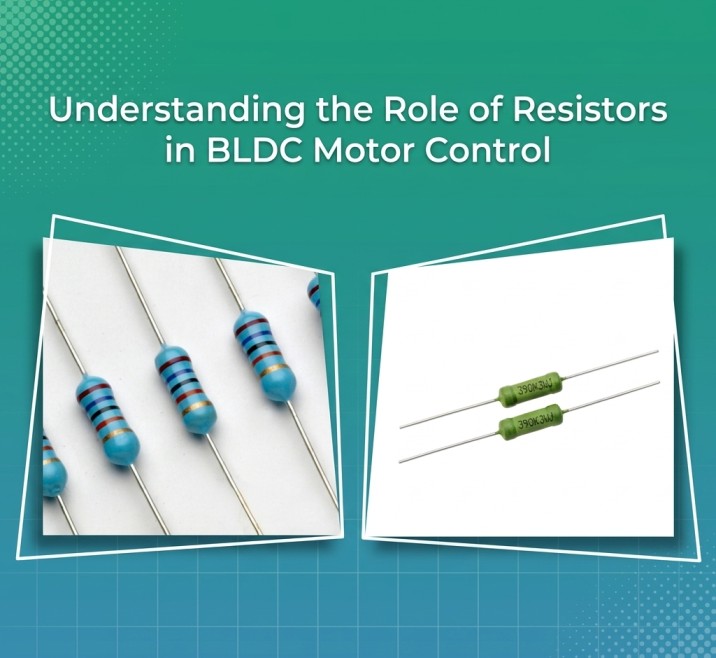
Understanding the Role of Resistors in BLDC Motor Control
This blog explores the critical role of high-performance resistors in Brushless DC (BLDC) motor systems. It examines how specific components like Metal Film Resistors and Thick Film Metal Oxide Resistors provide the stability and precision needed for modern motor control, ensuring longevity and operational efficiency in industrial and consumer applications.
The efficiency of a BLDC motor depends largely on the precision of its control electronics. To achieve smooth torque and accurate speed regulation, the circuit must manage electrical noise and heat while maintaining tight tolerances.
The core solution for optimizing BLDC motor performance lies in selecting resistors with high thermal stability and low tolerance to sense current and manage voltage drops accurately. High-quality resistors prevent circuit fluctuations that could lead to motor jitter or component failure.
Brushless DC motors have become the standard for applications ranging from electric vehicles to industrial automation. Unlike brushed motors, BLDC systems rely on electronic commutation. This requires a sophisticated controller to switch current to the motor windings at the exact right time. Within these controllers, resistors perform several vital tasks, such as current sensing, voltage division, and protecting the circuitry from power surges.
When designing these systems, engineers often look for components that can withstand environmental stress without shifting in value. This is where the choice between different resistor technologies becomes important for the overall reliability of the product.
The Precision of Metal Film Resistors
Metal Film Resistors are frequently used in the signal-processing parts of a motor controller. These components are made by depositing a thin layer of metal onto a ceramic core. The result is a resistor that offers excellent precision and a low temperature coefficient of resistance.
In a BLDC motor driver, Metal Film Resistors are ideal for circuits where accuracy is the top priority. For instance, in feedback loops that monitor motor speed, even a small change in resistance due to heat could result in incorrect data being sent to the processor. By using Metal Film Resistors, manufacturers ensure that the control system remains stable even as the internal temperature of the device rises during heavy use.
Beyond stability, Metal Film Resistors generate very little electrical noise. In high-speed motor applications, keeping the signal clean is essential for preventing interference that could disrupt the sensitive timing of the electronic commutation.
Durability with Thick Film Metal Oxide Resistors
While precision is necessary for signals, power handling is the main requirement for other parts of the motor circuit. This is where Thick Film Metal Oxide Resistors play a significant role. These resistors are built to handle higher temperatures and more significant power loads compared to standard thin-film varieties.
In the power stage of a BLDC motor, thick-film metal oxide resistors are often used in snubber circuits or as discharge resistors. These areas of the circuit frequently face voltage spikes and high thermal energy. Because thick-film metal oxide resistors are chemically and thermally stable, they do not degrade quickly when exposed to the harsh conditions found near high-power transistors and motor windings.
The robust nature of thick-film metal oxide resistors makes them a preferred choice for industrial environments where equipment runs continuously. They provide a level of durability that helps prevent the need for frequent maintenance or mid-cycle repairs.
Why Component Selection Impacts Website Traffic and Brand Trust
For a service provider like Cermet Resistronics, providing detailed technical information about products like Metal Film Resistors and Thick Film Metal Oxide Resistors helps build authority in the electronic components market. When engineers and procurement officers find helpful content that explains the practical application of these parts in BLDC motors, they are more likely to trust the brand for their sourcing needs.
Effective documentation of how Metal Film Resistors improve current sensing or how Thick Film Metal Oxide Resistors protect against surges serves as a resource for the community. This helpful approach naturally improves the visibility of the website in search results, as it directly addresses the technical questions asked by professionals in the industry.
Key Factors for Selecting Resistors in BLDC Applications
When choosing components for motor control, consider the following technical requirements:
- Tolerance: For current sensing, a low tolerance is necessary to ensure the controller receives accurate data.
- Temperature Coefficient: Choose resistors that maintain their value across a wide range of operating temperatures.
- Power Rating: Ensure the component can handle the maximum wattage expected during motor stalls or peak loads.
- Reliability: In safety-critical applications, the long-term stability of the resistor material is paramount.
By focusing on these attributes, designers can build motor controllers that are both efficient and durable. Whether it is the fine accuracy of Metal Film Resistors or the heavy-duty performance of Thick Film Metal Oxide Resistors, each part plays a specific role in the success of the system.
Advanced Thermal Management
Heat is the primary enemy of electronic components. In a compact BLDC motor housing, space is limited, and heat can build up quickly. Using resistors with high thermal conductivity helps move heat away from sensitive areas of the board. Thick Film Metal Oxide Resistors are particularly good at operating in these high-heat zones without suffering from resistance drift.
In addition to component choice, the physical layout of the resistors on the PCB (Printed Circuit Board) can influence performance. Placing Metal Film Resistors away from high-heat sources like MOSFETs helps maintain their precision. Meanwhile, Thick Film Metal Oxide Resistors should be placed where they have adequate airflow or heat-sinking to manage the power they dissipate.
The Future of Motor Efficiency
As industries move toward more sustainable energy use, the efficiency of BLDC motors will only become more important. Small improvements in the control circuit, driven by the use of superior Metal Film Resistors and Thick Film Metal Oxide Resistors, contribute to lower energy consumption and better battery life in portable devices.
Cermet Resistronics continues to provide the essential building blocks for these advancements. By focusing on high-quality manufacturing processes, they ensure that every resistor meets the rigorous standards required for modern engineering projects.
Frequently Asked Questions
- What is the main difference between Metal Film Resistors and Thick Film Metal Oxide Resistors in motor applications?
Metal Film Resistors are primarily used for high-precision signal tasks due to their low noise and stability. Thick Film Metal Oxide Resistors are used for power-heavy tasks because they can handle higher temperatures and electrical stress without failing.
- Why is current sensing important in BLDC motors?
Current sensing allows the controller to monitor the load on the motor. This information is used to adjust the power delivery, protect the motor from overcurrent situations, and ensure smooth rotation at various speeds.
- Can I use standard carbon resistors instead of metal film for motor control?
While carbon resistors are cheaper, they lack the stability and low temperature coefficient of Metal Film Resistors. In a motor controller, a carbon resistor might change its value as it gets hot, leading to inaccurate control and potential motor damage.