
Our Blogs
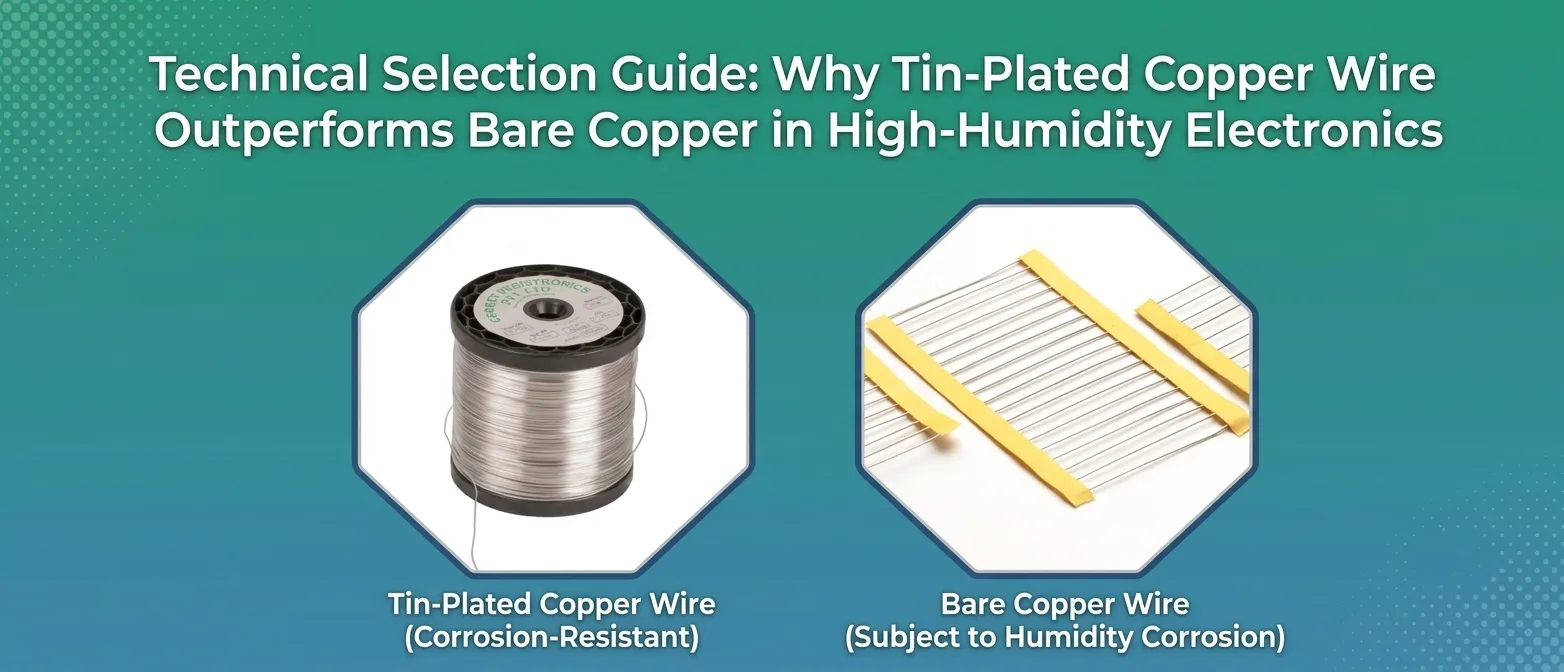
Technical Selection Guide: Why Tin-Plated Copper Wire Outperforms Bare Copper in High-Humidity Electronics
Copper serves as the primary standard for electrical conductivity in industrial designs, yet bare copper suffers from rapid oxidation, mechanical degradation, and soldering failures when exposed to moist or aggressive chemical environments. Applying an electroplated or hot-dipped tin coating over copper conductors resolves these vulnerabilities. This guide breaks down the structural makeup, anti-corrosive characteristics, thermal durability, and specific circuit integrations of tin-plated copper wires and tape jumpers manufactured by Cermet Resistronics.
Understanding the Structure of Tin-Plated Copper Wire
Electrical conductors operating in heavy-duty machinery, automotive electronics, and outdoor power distribution networks must withstand severe environmental stress. Bare copper wire forms copper oxide on its surface when exposed to oxygen and humidity. This oxide layer increases surface resistance, degrades solderability, and causes eventual signal distortion or complete power loss.
An electroplated or hot-dip tin layer acts as a barrier over the pure copper core. The tin shell seals the reactive copper underneath, halting oxidation without reducing electrical throughput. Tin resists oxidation even in damp, marine, or industrial environments; the central conductor remains fully protected.
Core Material Advantages
- Corrosion Resistance: The outer layer halts galvanic degradation caused by atmospheric sulfur, moisture, and chemical vapors.
- Stable Solderability: Tin coatings prevent oxidation build-up, maintaining strong wetting properties during automatic or manual soldering operations.
- Extended Shelf Life: Components using pre-tinned wires remain ready for assembly over long storage periods without requiring aggressive flux treatments.
- Reduced Contact Resistance: The soft nature of tin ensures low contact resistance at terminals and micro-junctions.
Key Applications in Modern Power Electronics
Selecting the proper interconnect components dictates circuit longevity in high-stress electronics. Cermet Resistronics supplies engineered tin-plated copper wires and tape jumpers for critical industrial assemblies.
1. Variable Frequency Drives (VFDs) and Inverters
Frequency converters demand high current-carrying capacity without thermal fatigue. Tin plated copper conductors resist thermal oxidation caused by continuous switching cycles, ensuring long-term connections inside closed electrical cabinets.
2. EV Pre-Charge and Battery Management Systems
Electric vehicle circuits face vibration, thermal cycling, and humidity changes. Tinned copper leads maintain stable connections in pre-charge resistor networks, battery chargers, and power conversion units.
3. Power Capacitor Discharging
Discharge networks dissipate large electrical charges within short windows. The clean solder bonding of tinned copper conductors reduces junction impedance, preventing localized hot spots during high-energy pulses.
4. Auto Electronics and BLDC Motors
Automotive engine bays and brushless motor assemblies subject wiring to heat and chemical fumes. Tinned copper leads retain high mechanical flexibility and electrical performance despite persistent environmental exposure.
Comparing Conductors: Bare Copper vs. Tin-Plated Copper
| Feature / Attribute | Bare Copper Wire | Tin-Plated Copper Wire | Tape Jumper Configuration |
| Oxidation Protection | Low (Forms copper oxide rapidly) | High (Tin layer blocks moisture) | High (Preserves pad solderability) |
| Solderability Window | Short (Requires surface cleaning) | Long (Immediate solder wetting) | Long (Optimized for automated pickup) |
| Moisture Resistance | Poor | Excellent | Excellent |
| Primary Design Use | Low-cost internal wiring | Industrial & outdoor electronics | Compact PCB trace bridging |
| Thermal Cycling Stability | Moderate | High | High |
Technical Specifications & Cermet Resistronics Standards
Cermet Resistronics applies over 34 years of resistor design and manufacturing expertise to deliver tinned copper leads that meet international industrial requirements.
- Manufacturer Certifications: ISO 9001:2015 certified quality management system, ISO 14001:2015 environmental standards.
- Environmental Compliance: Full compliance with RoHS (Restriction of Hazardous Substances) and REACH regulations, eliminating hazardous lead content.
- Safety Certifications: Products built to conform with CE and UL testing standards.
- Product Line Options: Available as standard tin-plated copper wire spools/leads and precision-cut tape jumpers for automated surface-mount and axial placement.
- System Quality: Built using lean manufacturing processes inside a 100% solar-powered production plant to ensure consistent mechanical dimensions and zero surface defects.
Manufacturing Quality and Quality Assurance
Producing dependable tinned wire requires tight control over layer thickness, drawing speed, and surface cleaning. Inadequate tin depth leaves micropores where oxidation can start, while excessive tin leads to uneven wire diameter and inconsistent terminal crimping.
Cermet Resistronics utilizes automated machinery and state-of-the-art testing facilities to verify coating uniformity, tensile strength, and electrical conductivity across production batches. This process control prevents common failure modes like tinned layer peeling, oxidation spots, and premature fatigue in high-vibration applications.
Frequently Asked Questions
1. Why choose tin-plated copper wire over bare copper wire for PCB designs?
Tin plating stops copper oxidation caused by air and humidity. It preserves wire solderability over extended periods and lowers contact resistance, making it the preferred choice for industrial and high-reliability circuits.
2. Does the tin coating reduce the overall electrical conductivity of copper?
The conductive core remains pure copper, carrying the bulk of the electrical current. The thin exterior layer of tin introduces negligible electrical resistance while offering protection against long-term oxidation and circuit degradation.
3. What are tape jumpers, and where are they used on circuit boards?
Tape jumpers are pre-cut, tinned copper wire segments formatted on tape reels for automated insertion equipment. They bridge electrical traces across printed circuit boards efficiently during mass production.
4. Are tin-plated copper products compliant with RoHS and REACH standards?
Yes, Cermet Resistronics manufactures tin-plated copper wires and tape jumpers in full compliance with RoHS and REACH standards, keeping them free from restricted heavy metals and hazardous substances.
5. How does tinned copper perform in high-humidity environments?
The tin layer forms an impermeable physical shield over the copper core, preventing water vapor, sulfur, and ambient chemicals from causing corrosion or electrical degradation.