


Our Blogs
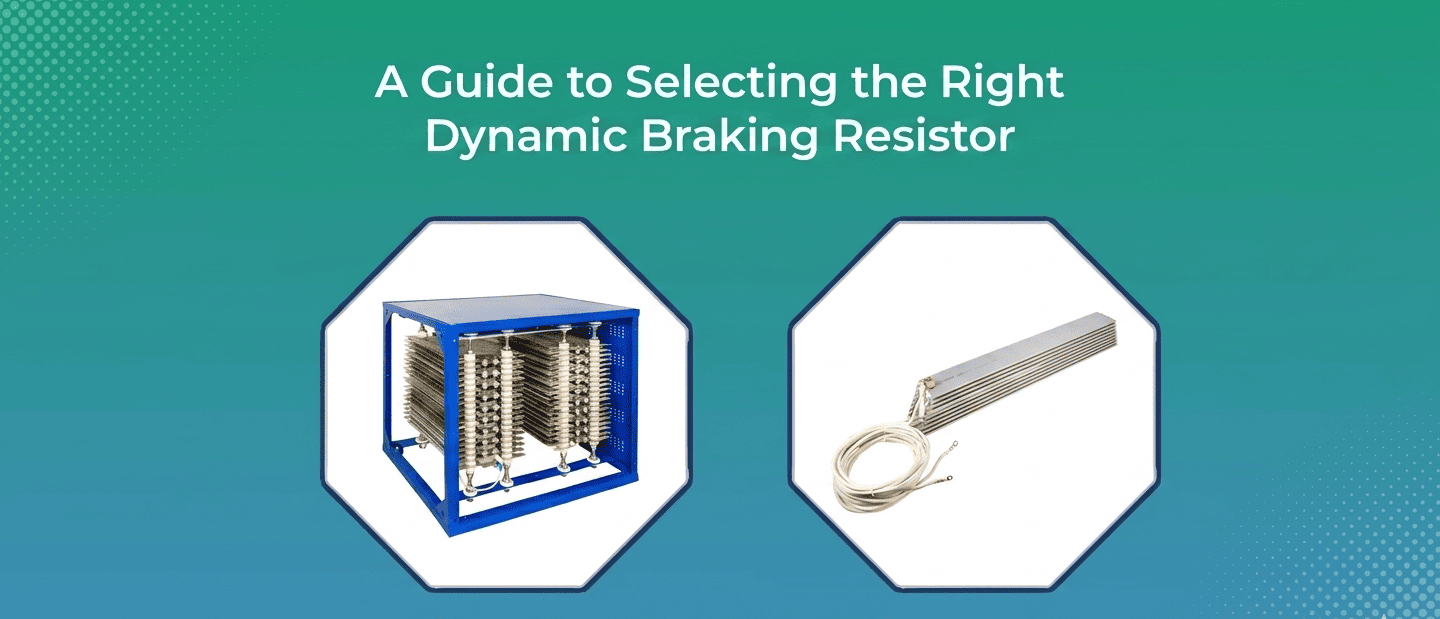
A Guide to Selecting the Right Dynamic Braking Resistor
Industrial motor systems generate significant kinetic energy during deceleration, which can cause overvoltage and equipment failure. This blog explores how Dynamic Braking Punched Grid Resistor and Aluminium Encased Dynamic Braking Resistors manage this energy, ensuring safety and operational longevity in applications like cranes, elevators, and automation.
To prevent overvoltage in Variable Frequency Drives (VFDs), dynamic braking resistors convert excess kinetic energy into heat, protecting sensitive electronic components while allowing for precise and rapid motor stopping.
Understanding Dynamic Braking in Industrial Environments
In modern industrial settings, precision and safety are non-negotiable. Whether it is an overhead crane lifting tons of material or a high-speed elevator in a skyscraper, the ability to stop a motor quickly and safely is critical. This is where dynamic braking comes into play. When a motor slows down, it effectively acts as a generator, feeding energy back into the system. If this energy is not managed, it can damage the drive and lead to costly downtime.
To handle these energy surges, engineers rely on specialized components. Two of the most effective solutions for high-performance energy dissipation are the Dynamic Braking Punched Grid Resistor and Aluminium Encased Dynamic Braking Resistors. Each serves a specific purpose based on the power requirements and environmental conditions of the application.
The Rugged Strength of the Dynamic Braking Punched Grid Resistor
For heavy-duty industrial applications, the Dynamic Braking Punched Grid Resistor is often the preferred choice. These resistors are engineered to handle massive amounts of power and are typically found in environments where vibration and high thermal loads are constant.
A Dynamic Braking Punched Grid Resistor is constructed using high-grade stainless steel or alloy grids. This design allows for a large surface area, which is essential for dissipating heat quickly during intense braking cycles. Because of their robust construction, these units are ideal for EOT cranes, traction systems, and heavy-duty conveyors.
When a crane lowers a heavy load, the motor generates a constant stream of energy. The Dynamic Braking Punched Grid Resistor absorbs this energy without overheating, preventing the load from descending in an uncontrolled manner. Its ability to withstand mechanical stress and extreme temperatures makes it a reliable component in the most demanding sectors.
Aluminium Encased Dynamic Braking Resistors
While heavy industry requires the bulk and power of grid resistors, many modern VFD systems and automation setups benefit from more compact solutions. Aluminium Encased Dynamic Braking Resistors provide high performance in a significantly smaller footprint.
The primary advantage of Aluminium Encased Dynamic Braking Resistors is their excellent thermal management. The aluminium housing acts as a built-in heat sink, drawing heat away from the internal wire-wound element and dissipating it into the surrounding air or a metal mounting plate. This efficiency allows these resistors to handle power ratings from 60 Watts to 4000 Watts while remaining small enough to fit inside tight control cabinets.
These resistors are frequently used in elevators and escalators. In these applications, passenger comfort and smooth stopping are priorities. The aluminium-encased dynamic braking resistors ensure that the deceleration process is controlled and smooth, protecting the VFD from voltage spikes that could occur during every stop and start.
Key Specifications and Technical Advantages
When selecting between a Dynamic Braking Punched Grid Resistor and Aluminium Encased Dynamic Braking Resistors, understanding the technical specifications is vital. These details ensure that the resistor can handle the specific pulse loads of your machinery.
For Aluminium Encased Dynamic Braking Resistors, the typical specifications include:
- Power Range: Available from 60W up to 4KW.
- Insulation Resistance: 1000 Mega Ohms at 500V DC.
- Dielectric Strength: 2KV for 1 minute between the terminal and the body.
- Temperature Coefficient: +/- 200ppm/˚C.
- Short-Time Overload: Can handle 10 times the rated wattage for 5 seconds.
- Environmental Protection: Often rated at IP54 or IP67 for dust and moisture resistance.
On the other hand, the Dynamic Braking Punched Grid Resistor is valued for its high wattage capacity and durability in open-air or ventilated environments. These are built to handle the continuous duty cycles required by industrial hoists and heavy machinery.
Why Quality Resistors Improve System Longevity
Investing in a high-quality Dynamic Braking Punched Grid Resistor or Aluminium Encased Dynamic Braking Resistors does more than just stop a motor. It protects the entire electrical architecture. By safely dissipating heat, these components reduce the thermal stress on the Variable Frequency Drive, which is often one of the most expensive parts of the system.
Without a reliable Dynamic Braking Punched Grid Resistor, the excess energy would stay within the DC bus of the VFD, leading to overvoltage trips. Frequent tripping not only slows down production but can eventually lead to component fatigue and failure. By using aluminium-encased dynamic braking resistors, you provide a dedicated path for this energy, ensuring that the drive remains within its safe operating limits.
Furthermore, these resistors help reduce mechanical wear. By using electrical braking, the reliance on friction-based mechanical brakes is reduced. This means brake pads and discs last longer, leading to lower maintenance costs and fewer service intervals.
Choosing the Right Solution for Your Project
The choice between a Dynamic Braking Punched Grid Resistor and Aluminium Encased Dynamic Braking Resistors depends on your specific operational needs. If your project involves a VFD in a clean, space-constrained environment like an elevator control room, the Aluminium Encased Dynamic Braking Resistors are the ideal choice. Their IP-rated enclosures protect them from dust and ensure safe operation near other sensitive electronics.
If you are designing a system for a steel mill, a dockside crane, or a mining conveyor, the high power capacity of a Dynamic Braking Punched Grid Resistor will be necessary to handle the massive energy loads generated by high-inertia movements.
Regardless of the choice, ensuring that the resistor matches the ohmic value and power rating of your drive is the most important step in the design process. Using a Dynamic Braking Punched Grid Resistor or Aluminium Encased Dynamic Braking Resistors that are properly sized will guarantee a safer, more efficient, and more reliable industrial operation.
Ensure your industrial drives are protected with high-quality energy dissipation solutions. Explore our full range of Dynamic Braking Punched Grid Resistor and Aluminium Encased Dynamic Braking Resistors at Cermet Resistronics to find the perfect fit for your motor control needs. Contact our technical team today for customized specifications.
Frequently Asked Questions
- What is the main difference between grid resistors and aluminium encased resistors?
A Dynamic Braking Punched Grid Resistor is designed for very high power and heavy-duty applications where high heat and vibration are present. Aluminium Encased Dynamic Braking Resistors are more compact, offer excellent heat dissipation via their housing, and are ideal for VFDs in smaller cabinets or cleaner environments.
- Can aluminium-encased dynamic braking resistors be used outdoors?
Yes, many aluminium-encased dynamic braking resistors are designed with high IP ratings, such as IP54 or IP67, making them resistant to dust and moisture, which is suitable for various industrial environments.
- Why does my VFD keep tripping on overvoltage during braking?
This usually happens because the kinetic energy from the motor has nowhere to go. Installing a properly sized Dynamic Braking Punched Grid Resistor or Aluminium Encased Dynamic Braking Resistors will absorb this energy and prevent the VFD from tripping, allowing for a smooth and uninterrupted operation.