

Our Blogs
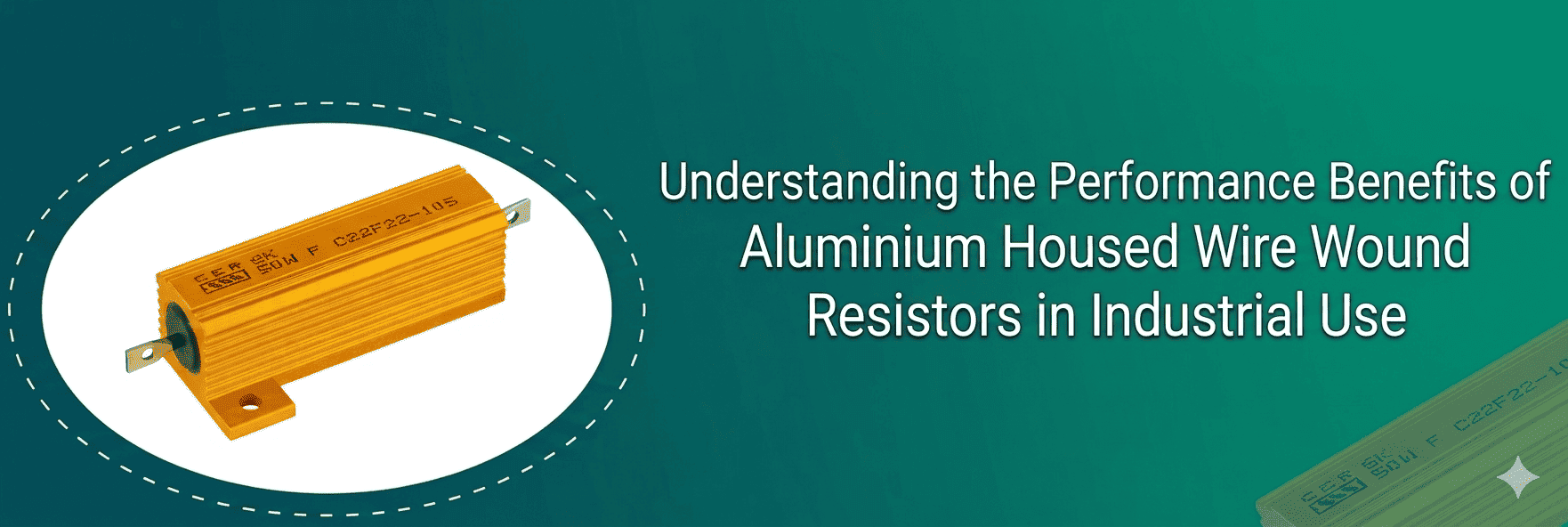
Understanding the Performance Benefits of Aluminium Housed Wire Wound Resistors in Industrial Use
Modern power electronics require components that can handle high electrical loads while maintaining physical integrity. This blog explores the technical advantages of aluminium-housed wire-wound resistors, with a specific focus on the CAH series. We look at how their unique construction provides superior heat dissipation, high stability, and protection against harsh environmental conditions, making them a preferred choice for industrial automation and power management.
Managing Thermal Stress in High-Power Electronics
In the world of electrical engineering, heat is often the primary enemy of component longevity. When dealing with high-wattage applications, standard resistors often fail to dissipate energy quickly enough, leading to circuit drift or total failure. This is where aluminium-housed wire-wound resistors become indispensable. These components are specifically designed to convert electrical energy into heat and transfer that heat away from the core as efficiently as possible.
The core solution for high-power stability is simple: Aluminium Housed Wire Wound Resistors utilise a metal casing that acts as an integrated heat sink, allowing the component to handle significantly higher power loads than traditional ceramic alternatives.
What are Aluminium-Housed Wire-Wound Resistors?
At their core, these resistors consist of a resistive wire wound around a non-conductive ceramic core. What sets Aluminium Housed Wire Wound Resistors apart is the outer casing. The resistive element is encapsulated within an anodised aluminium enclosure using a high-thermal-conductivity moulding compound. This construction provides two main benefits: mechanical protection and thermal management.
By housing the wire-wound element in metal, manufacturers can ensure that the resistor remains stable even when subjected to vibration or moisture. Furthermore, the flat surfaces of the aluminium housing allow for easy mounting onto metal plates or chassis, which further helps in drawing heat away from the internal wire.
Technical Specifications of the CAH Series
When selecting components from Resistor Cermet, understanding the technical limits is vital for system safety. The CAH series of Aluminium Housed Wire Wound Resistors is built to meet international standards of quality and performance.
- Power Rating: Available in a wide range from 5 Watts to 300 Watts (when mounted on a suitable heat sink).
- Resistance Range: Typically spans from 0.1 Ω to 10K Ω, depending on the wattage.
- Tolerance: Standard tolerances include ±1%, ±2%, ±5%, and ±10%.
- Temperature Coefficient: Designed for low drift, usually around ±50 ppm/°C to ±100 ppm/°C.
- Insulation Resistance: High insulation resistance (typically > 1000 MΩ) ensures safety in high-voltage environments.
- Dielectric Strength: Capable of withstanding high voltages between the terminal and the housing.
Why Aluminium is the Superior Choice for Housing
The choice of aluminium is not accidental. Aluminium has excellent thermal conductivity, second only to copper among common metals, but it is much lighter and more resistant to corrosion. In aluminium-housed wire-wound resistors, the casing is often finned or textured to increase the surface area available for air cooling.
When these resistors are used in confined spaces, such as inside a control panel or a compact power supply, the ability of Aluminium Housed Wire Wound Resistors to transfer heat directly to the mounting surface is a major advantage. This reduces the need for large cooling fans and helps maintain a smaller overall footprint for the final product.
Primary Applications in Industry
You will find aluminium housed wire-wound resistors in almost every sector that requires high-power regulation. Their durability makes them ideal for:
- Motor Control and Braking: Used to dissipate energy when a motor slows down, preventing damage to the drive electronics.
- Power Supplies and UPS: Providing load testing and surge protection in uninterruptible power systems.
- Inverters: Handling the high-frequency switching and thermal loads found in modern solar or industrial inverters.
- Industrial Automation: Acting as current limiters in heavy machinery and robotic systems.
Because aluminium-housed wire-wound resistors are vibration-resistant, they are also frequently used in railway equipment and heavy-duty vehicles where movement is a constant factor.
Improving System Reliability
Integrating aluminium-housed wire-wound resistors into your design is an investment in reliability. Because the resistive wire is protected from the atmosphere by the aluminium shell and specialised potting material, the internal element is shielded from oxidation. This means that the resistance value remains consistent over years of service, even in high-humidity or dusty environments.
Choosing the right aluminium housed wire-wound resistor involves calculating the peak power and the average power dissipation. It is always recommended to derate the resistor if it is operating in high ambient temperatures to ensure the longest possible lifespan.
Frequently Asked Questions
- Why should I use aluminium-housed wire-wound resistors instead of ceramic resistors?
Aluminium-housed wire-wound resistors offer much better heat dissipation because the metal casing can be mounted directly to a heat sink. They are also physically more rugged and resistant to environmental factors like vibration and moisture compared to standard ceramic resistors.
- Do aluminium-housed wire-wound resistors require a heat sink?
To reach their full rated power, most aluminium-housed wire-wound resistors should be mounted on a metal surface or heat sink. Without a heat sink, the power handling capacity is significantly reduced to prevent overheating.
- What determines the lifespan of aluminium housed wire-wound resistors?
The lifespan is primarily determined by the operating temperature and the load cycles. Operating these resistors within their specified thermal limits ensures that the internal wire does not suffer from thermal fatigue, leading to many years of stable performance.
Contact Resistor Cermet for High-Quality Solutions
If you are looking for durable and high-performance components, Resistor Cermet offers a wide selection of power resistors designed for various industrial needs. Explore our full range of aluminium-housed wire-wound resistors today and find the perfect match for your power management requirements. Visit our product page to download data sheets or contact our technical team for custom specifications.